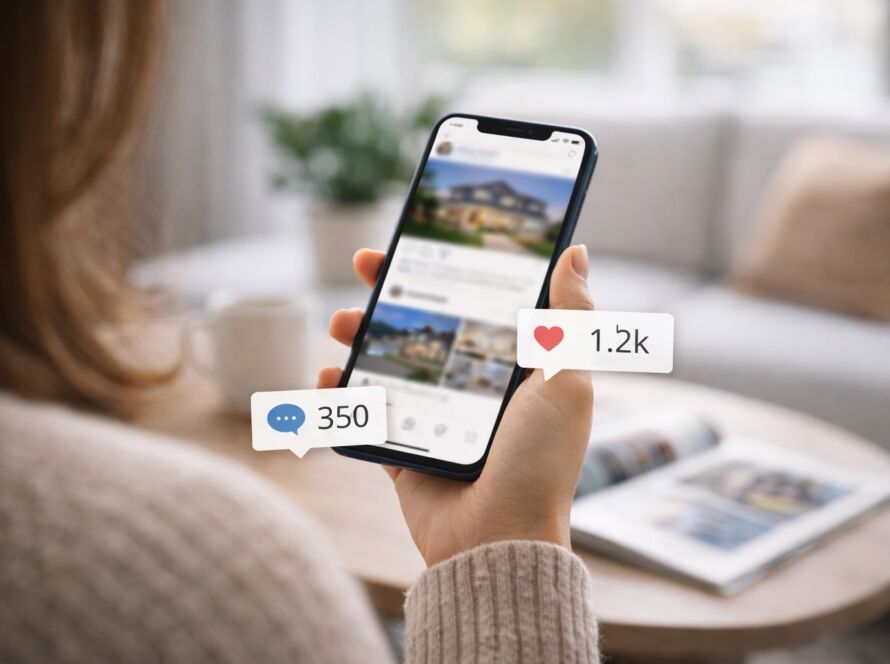
Paid social works when it feels less like advertising and more like a curated introduction. The best programs do not chase attention. They shape it. They place the right listing, the right message, and the right next step in front of buyers who are already moving toward a decision, then guide that interest forward with calm precision. That is the execution standard behind real estate social media ads for realtors.
How Paid Social Creates Qualified Demand for Realtors
For the ideas and pacing that keep your brand visible between campaigns, real estate social media post ideas offers a strong foundation.
The frustration most realtors experience with paid social is not a mystery. The platforms make it easy to spend money quickly, and they encourage optimization toward what is easiest to measure. Clicks, views, form completions. Those are not the same as qualified demand. A cheap lead that never responds is not a bargain. A high volume of inquiries that cannot be converted into showings is not scale. A beautiful video with strong engagement that produces no conversations is not performance.
The difference is rarely the platform. It is execution: a controlled system built to produce qualified demand, not just activity. When audience, creative, offer, and follow-up are aligned with intention, the attention you earn becomes the kind of demand you can convert.
Paid social becomes predictable when those elements are engineered as one experience. Treat any one of them as an afterthought and the program becomes noisy and expensive. Align them with discipline and paid social becomes a reliable driver of listing momentum and buyer conversations, without diluting the standard of your brand.
For a broader view of how multiple ads connect across a listing lifecycle, our guide to campaign architecture for paid social lays the foundation. From there, execution is what makes results repeatable: a three-layer structure that follows buyer intent, creative and copy that qualify with restraint, destinations that protect lead quality, and optimization that improves performance without constant resets.
Define the Objective for Real Estate Social Media Ads Before You Spend
The fastest way to waste budget is to launch ads before you define what success looks like. Paid platforms will optimize toward the easiest signal you allow, often clicks, views, or form submissions. Decide what the ads are meant to accomplish first, then build execution around that outcome. In practice, real estate social media ads for realtors tend to serve three distinct objectives, and each one changes what success should look like.
Listing momentum is about visibility with credibility. It creates the perception of activity and professionalism. It matters most in the early window of a listing, when serious buyers are watching and deciding whether the property is worth their time.
Qualified buyer capture is about conversations that convert. It is not a contest for the most leads. It is the discipline of generating inquiries that respond, schedule, and progress.
Market authority is about brand confidence. It makes future campaigns more efficient because the market begins to recognize your standard. It also strengthens seller trust because your marketing feels intentional rather than improvised. For a broader view of how luxury positioning shapes everything from presentation to buyer intent, our luxury real estate marketing guide adds the strategic context behind the standards discussed here.
A single paid program can support all three objectives, but clarity matters. Momentum often leads early. Qualified capture becomes the priority as interest concentrates. Authority is built continuously when presentation stays consistent.
If your organic presence needs to support these outcomes with consistent visibility and brand coherence, a stronger content cadence between campaigns can help keep your day-to-day presence aligned with the same strategic standard as your paid execution.
Build a Real Estate Social Ad Stack That Mirrors Buyer Behavior
Most buyers do not move from first impression to inquiry in one step. They explore, revisit, and compare, looking for signals of competence and taste. In premium markets the cycle is often longer, not because buyers are indecisive, but because they are careful with time and privacy. A predictable paid system mirrors that behavior through a simple ad stack: a sequence of ads that introduces the listing, adds depth for buyers who return, then guides high-intent prospects toward a controlled next step. It is not complex. It is disciplined. For real estate social media ads for realtors, this structure keeps spend focused on buyers who are moving from interest to action.
Discovery Ads for Real Estate Social Media
Discovery is the early-stage layer. It introduces the listing or your brand to buyers who are likely to be in-market, with the goal of earning qualified attention. At its best, it feels like an invitation to notice.
Discovery ads perform best when they communicate one strong idea quickly. One striking exterior moment. One interior line with light and scale. One detail that implies craftsmanship. The copy should remain restrained and confident. The next step should not demand commitment. It should invite exploration, such as viewing a short tour or spending a few minutes with the listing presentation.
Discovery audiences should be broad enough to allow learning, but specific enough to remain relevant. Geography matters. Market corridors matter. Lifestyle patterns matter. This is where you begin shaping the audience pool that retargeting will later convert.
Consideration Ads for Real Estate Social Media
Consideration is the mid-stage layer. It serves buyers who have already engaged, whether they watched a video, clicked through to a listing, saved content, or revisited a page. The goal is depth, not reach.
Consideration ads add context that helps a buyer decide whether the listing aligns with their priorities. Curated carousels and short-form video sequences tend to perform well here because they provide a sense of flow and detail. This is also where neighborhood context becomes meaningful, not as a list of amenities, but as a sense of location, privacy, proximity, and atmosphere.
This is the stage where your brand earns trust. The buyer is asking, often silently, whether the listing is being handled with competence. Your presentation answers that question before your phone ever rings.
Intent Ads for Real Estate Social Media
Intent is the late-stage layer. It reaches buyers who have already shown strong interest, often through retargeting, meaning your ads are shown again to people who have engaged repeatedly, visited key pages, or watched a meaningful portion of your video content. The goal is conversion with discretion.
Intent ads should offer a structured next step. A private showing request. A discreet tour scheduling option. A listing book that provides meaningful detail. A concierge-style path into conversation that feels controlled and professional.
At this stage, clarity matters. The buyer is no longer deciding whether to notice. They are deciding whether to engage. A controlled next step converts serious interest into action while filtering out casual curiosity.
For the mechanics of retargeting built around real estate behavior patterns, our guide to real estate remarketing strategies expands the sequencing and audience logic that makes the stack more efficient over time.
Choose Platforms for Real Estate Social Media Ads Based on Execution Strength
There is no universal best platform. There is only the channel where your buyers pay attention and your team can execute consistently at a high standard. Platforms are where the work is delivered. Performance is determined by the system behind it, and the strongest results come from executing that system consistently across the channels where your buyers already spend time.
Instagram Ads for Realtors
Instagram is built for visual persuasion. It rewards composure, mood, and aesthetic consistency. It also exposes clutter quickly. Ads perform best when they feel native to the feed, as if they belong within a refined editorial presence rather than arriving as an interruption.
Instagram is particularly effective for short-form video, curated carousel tours, and imagery that communicates atmosphere in seconds. It also supports authority when your profile reflects a consistent standard, because many buyers will click through before they inquire. If the organic presence feels scattered, the ad can still earn attention, but it will struggle to earn trust.
For a channel approach that keeps brand, content, and paid execution aligned, Instagram for real estate supports the discipline that performance requires.
Facebook Ads for Realtors
Facebook remains strong for reach, local relevance, and certain buyer segments. It performs best when the creative feels familiar to the way people browse, with neighborhood signals, practical context, and a sense of place that reads as relevant rather than promotional.
A common mistake is to run creative that looks like a brochure. Brochure-style ads often get ignored because they feel like advertising first. Creative that reads like content tends to earn attention, then convert through thoughtful retargeting and well-timed follow-up.
For angles that translate cleanly into paid placements without losing refinement, Facebook post ideas for realtors can be shaped into ad-first concepts that still feel composed.
Video-first Channels as Discovery Layers
TikTok and YouTube Shorts can be effective for top-of-funnel awareness when short-form video is produced with restraint. These channels are most useful when they are treated as discovery layers that build familiarity and feed retargeting elsewhere, rather than being asked to carry immediate conversion on their own.
Most teams scale faster by mastering one ecosystem deeply before expanding to additional channels. Consistency tends to outperform complexity, especially when brand standards matter.
For teams that want this discipline to run consistently across Facebook and Instagram without rebuilding the wheel for every listing, Social AI Advantage offers a streamlined way to launch and manage geo-targeted promotion while keeping presentation standards intact.
Audience Targeting for Real Estate Social Media Ads That Works Within Housing Constraints
Housing-related advertising often comes with platform restrictions that limit how precisely you can target. That limitation is not a reason to accept weak performance. It simply changes where the discipline lives. When targeting options narrow, audience structure, creative specificity, and offer design must do more of the qualifying work.
A stable execution model begins with three audience layers, each designed to match a different level of intent.
Local Discovery Audiences
Start with realistic geography. Radius targeting should not be a habit. It should reflect how buyers actually search for that type of home. A primary residence listing behaves differently than a second-home listing. A downtown condo behaves differently than a rural estate. A waterfront property behaves differently than an in-town historic home.
Local discovery should follow movement patterns, not guesswork. If those patterns are not obvious, map them. Identify the corridors buyers travel, the lifestyle anchors that shape preference, the school zones that influence decision making, and the neighborhoods that behave as true substitutes. When geography is thoughtful, discovery stays relevant while still providing enough reach for learning.
Engagement and Website Retargeting
This is where efficiency tends to begin. Buyers who have already engaged are easier to convert because they have context. Retargeting should be built with intentional windows. Some buyers need a short window. Others need a longer window. Listing type, price band, and market pace usually determine the appropriate cadence.
Retargeting also benefits from sequencing. Showing the same ad repeatedly rarely creates depth. It creates fatigue. A controlled sequence that adds context over time tends to perform better than repetition, especially when the creative evolves from atmosphere to detail, then from detail to a clear next step.
Similarity Audiences Built from High-Intent Signals
Similarity audiences are often misunderstood. They are not a shortcut. They are a scaling tool, and they are only as strong as the signal they are built from. When similarity is built from low-intent behaviors, it scales casual attention. When it is built from meaningful actions, it scales qualified interest.
The standard is simple: build similarity from actions that indicate real intent, not from broad engagement that is easy to generate.
When affluent buyer capture is the priority, audience logic and message discipline should also reflect privacy expectations. Our guide to targeting high net worth clients provides a framework for aligning value signals, discretion, and qualification without forcing an aggressive sales tone.
Creative Standards for Real Estate Social Media Ads That Convert Without Cheapening the Listing
Real estate social media ads for realtors do not need to look like advertising to perform. In many markets, they perform better when they do not, because the presentation feels like a curated introduction rather than a sales interruption.
The highest-performing creative tends to follow a consistent visual hierarchy. It earns attention first, then builds desire through detail and atmosphere, then offers a next step that feels controlled and worth the buyer’s time.th the buyer’s time.
The First Frame Must Earn the Pause
In social environments, the first moment matters more than any headline. If the opening frame is weak, the rest rarely gets a chance.
The first frame should communicate clarity and quality. Strong light. Clean lines. A sense of space. A detail that implies craftsmanship. An exterior moment that feels composed. Keep overlays minimal. Avoid crowded text. Avoid graphics that compete with the home.
Each Asset Communicates One Idea
Many realtors try to compress everything into a single ad. Price, features, location, urgency, credentials, calls to action. The result is usually noise.
A better standard is simple. One ad communicates one idea well. One lifestyle cue. One architectural statement. One neighborhood signal. When multiple ideas matter, they should be expressed across the sequence, not forced into a single frame. This preserves refinement and improves performance because the buyer is not asked to process everything at once.
Formats that Consistently Perform
Short-form video performs well because it communicates space quickly. A viewer can understand flow, light, and atmosphere in seconds. Carousels perform well when each frame earns its place and the sequence feels curated rather than repetitive. Single-image ads still work when the image is exceptional and the copy remains restrained.
If your paid program needs stronger video assets without raising production complexity, our guide to video marketing for real estate agents outlines formats that translate cleanly into ads while preserving a refined standard.
Stories and vertical placements perform best with vertical creative designed for that frame. Cropping horizontal footage into vertical placements often weakens composition and diminishes perceived quality.
Templates as a quality-control system
Templates can protect brand standards when they are used as a system, not a shortcut. The role of a template is to establish consistent typography, spacing, and layout discipline, then let the listing imagery carry the value.
Real estate social media templates supports a system for building consistent, on-brand variations across formats without sacrificing presentation.
Copywriting for Real Estate Social Media Ads That Qualifies Quietly
Buyers can sense pressure, and social platforms amplify that instinct. When copy leans on urgency, credibility tends to erode. When copy leans on confidence and clarity, serious buyers are more likely to lean in.
Effective ad copy for realtors is composed, not crowded. It establishes context quickly, introduces a meaningful differentiator, then offers a next step that feels controlled.
Context can be as simple as a neighborhood cue, a setting, an architectural style, or a lifestyle detail that matters to the right buyer. The goal is not to say everything. The goal is to signal relevance.
A differentiator should follow, ideally one or two details that elevate the listing beyond the comparable set. Avoid feature dumping. Features belong where the buyer is already committed to exploring, such as a listing presentation or a landing page built for depth.
Finally, offer a next step that invites rather than insists. The best copy creates a sense of access, not pressure. It gives the buyer a reason to explore further and a clear path to do so.
Strong copy does not try to persuade everyone. It attracts the right buyer and lets everyone else pass. That is qualification, and it is what protects time.
Offer Strategy for Real Estate Social Media Ads That Matches Buyer Intent
The offer is what turns attention into action. Many ads underperform because they ask too much too soon, or they present a next step that does not match where the buyer is in the decision cycle.
A reliable approach uses two offer types, designed for two different mindsets.
Exploration Offers
Exploration offers are for buyers who are browsing and orienting. The next step should feel valuable without requiring immediate commitment. A short video tour, a discreet listing book, a curated set of similar listings, or a neighborhood snapshot can all work when the presentation remains composed.
Exploration offers also strengthen retargeting. A buyer who watches a full tour or requests a listing book is signaling a higher level of interest than someone who taps a boosted post out of curiosity.
Engagement Offers
Engagement offers are for buyers who are closer to action. A private showing request can perform well when framed with clarity. A structured scheduling pathway can feel professional rather than pushy. A concierge-style inquiry can communicate discretion and set expectations without pressure.
When affluent audiences are the priority, offers should respect privacy and time sensitivity. They should feel like a professional service, not an open call for leads.
Lead Forms Versus Landing Pages for Real Estate Social Media Ads
This choice shapes lead quality more than most realtors realize. It is not simply a technical preference. It is a decision about intent, context, and how much control you want over the buyer’s experience. In real estate social media ads for realtors, this choice often determines whether inquiries feel casual or qualified.
When Lead Forms Work Best
Lead forms reduce friction. They can be effective when the offer is early-stage and your follow-up system is disciplined. They also work when the buyer is not ready for a longer experience, but is willing to exchange contact information for something useful.
Lead forms should still feel curated. The language should set expectations. The questions should not be excessive, but they should encourage seriousness. A form that asks nothing of substance invites noise.
When Landing Pages Outperform
Landing pages tend to produce higher intent inquiries because they provide context before contact. They allow the buyer to self-select, and they keep your brand presentation consistent through the next step.
A landing page should not feel like a funnel. It should feel like an extension of the listing presentation. Clean hierarchy. Restrained copy. Clear next step. Strong imagery. Thoughtful pacing.
Landing pages also strengthen retargeting because they generate richer behavioral signals, such as scroll depth, time on page, and engagement with key elements. Those signals can be used to refine the ad stack over time.
Follow-Up as Part of the Real Estate Social Ads System
Ads do not close transactions. People do. Follow-up is the conversion engine, and it belongs to the paid system, not beside it.
One of the most expensive hidden costs in paid social is slow or inconsistent response. Buyers who are ready to move will move quickly toward clarity. If they do not receive it, they move on.
A disciplined follow-up approach is straightforward. Respond quickly. Confirm the inquiry with professionalism. Offer a specific next step. Add value in the second touch, such as a tour link, a listing book, or a relevant note about the property. Keep scheduling controlled and simple, so engagement feels easy without feeling casual.
Operational readiness is what makes this scalable. If content production, response workflows, and governance are not systematized, the marketing layer becomes unstable. Operational systems that stabilize execution connect paid performance to the operational reality that determines ROI.
Budgeting for Real Estate Social Media Ads That Produces Stability
Budgets do not fix weak execution. They amplify it. When execution is strong, budgets create scale. When execution is weak, budgets create waste.
A stable approach begins by separating discovery from retargeting. If discovery consumes all spend, high-intent audiences are starved. If retargeting is funded without discovery, the audience pool never grows.
Avoid constant resets. Frequent changes interrupt learning and create volatility. What often looks like platform inconsistency is usually system inconsistency.
Scale gradually. Increase budgets once results hold across time and across creative variations. A short spike is not a strategy. Stability is the signal that scale will hold.
Testing and Optimization for Real Estate Social Media Ads Without Destroying Performance
Testing is essential, but it becomes destructive when it is undisciplined. Many programs fail because they change too many variables at once, then cannot identify what actually improved performance.
A disciplined cadence protects stability. Test creative variations while keeping the audience stable. Test offers without rewriting every line of copy at once. Adjust budgets gradually. Protect retargeting budgets so high-intent audiences are never starved.
A tight standard keeps optimization clear:
- Change one primary variable at a time.
- Allow enough time for meaningful learning before judging.
- Scale what holds, not what spikes.
If you want the broader model that ties optimization into a full listing lifecycle, campaign planning for real estate social ads provides the structure that keeps refinement intentional rather than reactive.
Metrics That Matter for Real Estate Social Media Ads for Realtors
Platforms surface metrics that are easy to generate. For real estate social media ads for realtors, those numbers are only useful when they translate into real conversations and showings.
Clicks are not outcomes. Cheap leads are not necessarily wins. High reach can be hollow if it does not translate into exploration, inquiry, and real conversations.
Measurement should map to business reality. Response rate, appointment rate, quality of conversations, and progression into showings are the signals that matter most.
Paid systems also benefit from measuring the quality of exploration. Landing page engagement, video watch depth, and retargeting efficiency over time can indicate whether your creative is attracting serious attention or simply collecting casual activity.
When a program generates leads but conversion feels thin, the issue is often the offer, the destination, or the follow-up. Those are execution variables, and they can usually be corrected without changing platforms.
Align Real Estate Social Media Ads to the Listing Timeline
A listing does not behave the same way on day three and day forty. Your ads should not behave the same way either.
Early-stage execution typically prioritizes momentum. Lead with your strongest creative. Keep the next step easy. The goal is to shape perception and build initial demand without forcing commitment.
Mid-stage execution shifts toward depth. Buyers revisit, compare, and look for the detail that confirms the listing is worth their time. Video tours, neighborhood context, and a clear differentiator tend to perform well here.
Late-stage execution prioritizes efficiency. Retargeting carries more weight. Messaging can become more direct because the buyer already has context.
Many realtors lose performance by running one ad too long and expecting the market to behave the same way indefinitely. Strong systems evolve while preserving a consistent standard of presentation.
Brand Safety and Quality Control for Real Estate Social Media Ads
Paid social is public. Low-quality execution does not just waste money. It can quietly reduce trust.
Accuracy matters. Imagery should represent the listing honestly. Language should remain composed and professional. Avoid exaggerated claims. Avoid urgency tactics that feel out of place. Respect privacy expectations, especially for premium properties.
In high-value markets, perceived quality is inseparable from actual quality. Your ads are marketing the listing and your standards at the same time.
When Outsourcing Real Estate Social Media Ads Becomes Strategic
Outsourcing is not about surrendering control. It is often about protecting consistency.
Paid social requires creative iteration, disciplined testing, and reporting tied to meaningful outcomes. Many internal teams cannot sustain that cadence while managing showings, negotiations, seller communications, and day-to-day operations.
Outsourcing becomes the right decision when you need consistent production across multiple listings, controlled optimization, and a partner who can maintain brand standards while improving performance.
If your internal systems are still being structured, social media management for realtors can help clarify what should remain internal and what can be delegated without losing the voice and standards that define your brand.
Your Edge Moving Forward With Real Estate Social Media Ads
Real estate social media ads for realtors become predictable when they are built as an experience, not a collection of tactics.
Discovery introduces the listing with composure. Consideration adds depth and context. Intent offers a controlled next step. Creative signals standards. Copy qualifies quietly. The destination protects lead quality. Follow-up converts interest into conversation.
When paid and organic reinforce each other, the compounding effect becomes visible. Paid reveals what resonates. Organic strengthens credibility. Together, they create a market presence that feels composed and intentional.
For a stronger content engine that keeps your organic presence consistent without drifting into filler, our guide on organic angles that keep your brand visible can help you stay present in the market while preserving a refined standard. When creative consistency is the constraint, real estate social media templates can protect presentation while still allowing variation for performance.
Executed with discipline and restraint, paid social stops being a source of random wins and becomes a controlled driver of qualified buyer demand.