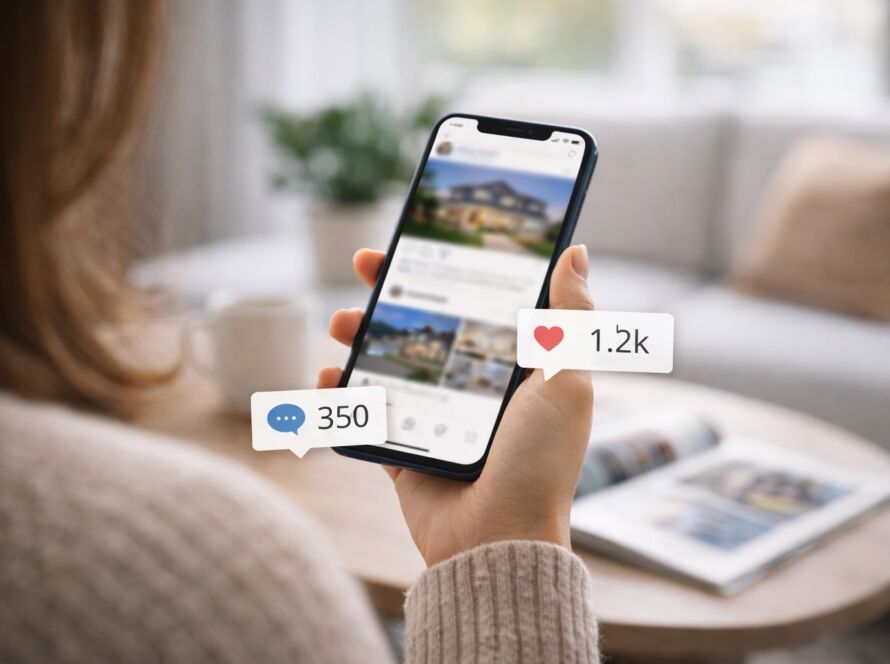
Video marketing for real estate agents rarely fails because a Realtor lacks expertise. The breakdown usually comes from friction: the work feels exposed, time-consuming, and difficult to contain inside a schedule that includes showings, negotiations, and client communication. When video is treated like an extra project, it competes with everything else.
Why Video Marketing for Real Estate Agents Breaks Down Early
Discomfort on camera is the first barrier. Many real estate agents assume confidence must arrive before they press record, so they wait until they feel “ready.” Confidence rarely appears on its own. Comfort grows when the goal is guidance, not performance, and when each clip has a specific job to do for your pipeline.
Being overwhelmed with equipment is another common blocker, and it starts with good intentions. A quick search turns into a shopping list of lights, microphones, gimbals, drones, and editing apps. That list implies a studio is required before results are possible. Most Realtors need a dependable setup they can repeat without thinking.
Uncertainty about what to film is another reason video disappears after a strong start. A listing goes live, a walkthrough is recorded, and then momentum fades because the next recording feels like a blank page. Structure solves that problem. A small set of formats, filmed with intent, creates variety without turning marketing into production.
The fear of lost time investment sits underneath everything. Realtors worry they will spend hours filming only to receive a handful of indifferent views. That fear is rational when video is treated as a one-off creative gamble. The anxiety fades when footage is designed to be repurposed across multiple channels, with a distribution plan decided before filming begins.
Planning becomes easier when the strategy exists before the camera comes out. A broad library of real estate social media post ideas gives you themes that already map to buyer curiosity, seller expectations, and market conversations. Video then becomes an extension of your message rather than an experiment.
A clear system is what turns video into a practical marketing tool. With that foundation, video marketing for real estate agents becomes a repeatable workflow instead of a weekly stress test.
The Role of Video Marketing in Digital-First Real Estate
Video compresses distance. Buyers can understand layout faster when movement guides attention. Sellers can sense professionalism sooner when marketing feels immersive. Future clients can decide whether they trust you before a call is ever scheduled.
Most real estate decisions now begin with a screen, and the early screen experience shapes what happens later. Video belongs inside a broader digital strategy, where it earns attention, communicates value, and reduces uncertainty.
Video Supports Each Stage of the Modern Funnel
Awareness is where most people meet you. A short clip reaches someone who is not actively searching, but is open to being influenced. Consideration is where a viewer decides whether the listing is worth time. Conversion is where a buyer requests a showing, or a seller decides you deserve the next listing. Video can support every stage without becoming complicated, as long as the format matches the intent.
Short-form visibility is easiest to sustain when it is anchored inside Instagram for real estate, where reels and stories support your positioning rather than replacing it. Facebook still plays a different role, and it benefits from a voice that feels local and grounded, supported by real estate Facebook post ideas that fit the platform’s culture.
Video Is a Trust Signal for Sellers as Much as It Is a Tool for Buyers
Buyers use video to understand the home. Sellers use video to judge the Realtor. A property owner evaluating marketing plans often reads video as proof that you can present a listing with care. Even simple production can feel premium when the pacing is calm, the message is clear, and the visuals look intentional.
Trust is built from small signals that arrive quickly. Clear explanations signal competence. Calm delivery signals control. Clean visuals signal care. Those cues matter in every price tier, and they matter even more when you are competing against Realtors who still rely on static photos and generic captions.
Video Performs Best When It Is Treated as an Asset Library
A single recording can become multiple placements. A walkthrough can live on a listing page, be clipped into short-form scenes, and be shared directly with qualified buyers. A market insight clip can be posted on social, embedded in a newsletter, and used later as proof of expertise when a seller asks how you read the market.
When the role of video is clear, video marketing for real estate agents stops feeling like extra work and starts functioning like a modern trust layer.
Core Video Marketing Formats for Real Estate Agents
A strong video presence does not require endless variety. A modern system is built on a small set of formats that match buyer intent, seller expectations, and your brand. Each format should be repeatable enough to film without hesitation, and distinct enough to serve a different purpose.
Listing Walkthrough Videos and Virtual Tours
Many people in the industry refer to listing walkthrough videos as virtual tours. That language is useful because it covers more than one format, and because buyers tend to search the phrase “virtual tour” when they want a more immersive preview.
A traditional walkthrough is a guided video. It helps viewers understand layout, flow, light, and proportion in a way photos cannot. Cinematic polish is optional. Clarity is not. Pacing matters more than effects, and a calm sequence matters more than dramatic transitions. Viewers should feel oriented, not rushed.
A 3D experience, such as a Matterport tour, is also a virtual tour. Instead of watching your path through the home, the viewer navigates the space interactively. That can be valuable when layout is complex, when buyers are relocating, or when early screening can reduce unqualified showings.
Portal video support varies, so treat any virtual tour as an asset you control. Host the tour on a stable link you can share across your site, email, and social channels, then place it everywhere the platform allows. That approach protects your effort even when third-party display options change.
Walkthrough footage also becomes a strong foundation for promotion. A clean tour can be used inside campaigns that use your listing videos without forcing you to reinvent creative every time you want to expand reach.
A walkthrough is also a proof point that shows future sellers the caliber of marketing you deliver. When filmed with restraint and clarity, the same footage can help you win the next listing conversation.
Short-Form Social Clips for Awareness and Recall
Short-form clips are designed for attention, not completeness. Reels, shorts, and stories perform best when each video communicates one idea: one room reveal, one light-filled detail, one feature that invites curiosity.
A useful mindset shift is to treat short-form as micro-scenes rather than mini tours. Viewers do not need everything at once. They need enough clarity to stay interested, and enough repetition over time to remember who you are.
Consistency matters. Short-form performs most reliably when it is tied to an Instagram strategy for video rather than posted sporadically and left to luck. When short-form is aligned with your overall tone, the content feels like a signature rather than a trend.
Neighborhood and Lifestyle Videos for Context and Authority
Neighborhood content answers a question buyers rarely ask directly: what will life feel like here. Relocation buyers want context. Local buyers want confirmation. Sellers notice when marketing tells a story beyond the home’s interior.
Lifestyle clips also build authority. Over time, they position you as a market interpreter, not simply a listing promoter. That difference matters when a property owner is deciding who deserves the next listing, and it matters when a buyer is choosing which Realtor feels like a real guide.
Realtor Introduction Videos for Brand Trust
An introduction video is not a résumé. It is a credibility moment. Viewers want to understand how you work, what you value, and what it feels like to be guided by you.
The strongest introductions stay simple. Speak to who you serve, how you protect the client experience, and what your standards look like in practice. Stop before it becomes biography. The goal is familiarity and trust, not a life story.
This asset is also a powerful building block for ads that promote you and your listings when you want to promote your name alongside your listings without sounding self-focused. When the tone is calm, the video reads as leadership rather than self-promotion.
Educational Market Insight Videos for Consideration and Conversion
Market insight content signals expertise quickly. Buyers want interpretation, not noise. Sellers want evidence that you understand leverage and timing. Short updates, pricing explanations, and neighborhood comparisons perform well when they are calm, specific, and consistent.
Recurring themes are easier to sustain when you draw from content ideas that can be turned into video and shape those ideas into repeatable segments. Consistency is more persuasive than novelty. A Realtor who explains market movement clearly each month becomes the voice people remember when timing matters.
Together, these formats create a library that supports both the current listing and future acquisition. When the core types are in place, video marketing for real estate agents becomes a blueprint instead of a guessing game.
Vertical vs. Horizontal Video for Real Estate Marketing
Format decisions should be driven by distribution. Many real estate agents film only horizontal because it feels “professional,” then struggle to make the footage work on social. Other Realtors film only vertical and end up with assets that do not translate well to listing pages, presentations, or longer-form platforms.
Vertical for Social Attention
Vertical fills the screen and matches how buyers browse casually. Reels, stories, and shorts are natural homes for vertical. Listing highlights and neighborhood moments also work well in vertical when they are meant to be consumed in passing.
Vertical also supports tighter framing. That matters when you want to showcase a detail without distracting the viewer with everything else in the room. A simple rule is to use vertical when the goal is reach and recall.
Horizontal for Research Mode and Owned Placements
Horizontal still has a role, especially when the viewer is in research mode. Listing pages, websites, YouTube, and presentation settings often benefit from a wider frame. The format feels calmer when a viewer is prepared to spend time, and it can communicate scale more naturally.
Horizontal also helps when a space needs context. Great rooms, outdoor living, and long sightlines often read more clearly in a wider frame.
A Mixed Approach That Protects Repurposing for Social Channels
A practical approach is to plan filming with repurposing in mind. Capture one clean horizontal walkthrough for evergreen placement, then record additional vertical moments for social. When time is tight, prioritize vertical and frame your shots so they can be cropped or reframed later without losing the subject.
Those choices reduce wasted effort. They also make workflow easier to manage inside a larger system, especially when supported by social media management for real estate agents that keeps publishing and repurposing consistent.
When format becomes intentional, video marketing for real estate agents becomes easier to scale without turning into a production burden.
What Real Estate Video Marketing Looks Like When It Works
Quality is often misunderstood. Many Realtors chase cinematic polish when what they need is clean, stable, and clear. The right standard is not “filmmaker.” The right standard is “credible and on-brand,” because the audience is making a marketing judgment as much as a property judgment.
Clarity Beats Spectacle
A viewer should understand what they are seeing without effort. That means clean pacing, simple camera movement, and a sequence that respects how buyers evaluate a home. Clarity also means saying only what matters. When the message is calm and specific, the video feels premium even when production is simple.
Lighting That Supports the Listing
Natural light is usually the best option. Position yourself facing a window when possible and avoid filming with bright windows behind you. For interiors, orient the camera toward the light source so rooms look open rather than dim.
Artificial lighting can help, yet restraint matters. A small light used softly is often enough to reduce shadows without making the scene feel staged. When the goal is premium, realism is more persuasive than gloss.
Stability and Composition as Trust Signals
Stability is a trust signal. Shaky footage makes even a beautiful listing feel chaotic. Move slowly. Keep turns gradual. Pause briefly before changing direction. Give the viewer a moment to understand each room before you move on.
Composition should show structure without distortion. Avoid pushing a lens so wide that door frames and corners warp. A clean frame protects trust. A calm sequence protects attention.
Brand Consistency Without Heavy Graphics
Brand consistency does not require elaborate motion design. It requires coherence. Fonts, colors, and on-screen text should match the rest of your marketing so video feels like part of your brand, not a separate aesthetic.
Coherence becomes easier when your broader presence is supported by real estate social media templates that keep your visual identity consistent across posts, captions, and promotions. A clean template system also helps when you want to add subtle overlays such as a neighborhood name, a single value statement, or a short call to action.
A credible standard protects perception. When your footage looks calm and intentional, video marketing for real estate agents supports not only buyer engagement, but also seller confidence.
Creating Real Estate Marketing Videos Without a Production Job
The fastest way to improve video output is to remove friction. Most real estate agents do not need a gear closet to publish consistently. Realtors need a small setup and a simple rhythm that protects their time.
A Smartphone-First Foundation That Stays Consistent
Modern phones are more than capable for most real estate video needs, especially when lighting and stability are handled well. Consistency matters more than resolution. Choose a default camera setting, stick with it, and focus attention on environment and motion.
Sound becomes important the moment you speak. A quiet room often matters more than a microphone. When filming at a listing, pause for a moment and listen before recording. HVAC noise, traffic, and echo can make an otherwise strong clip feel cheap.
Capture Once, Publish Many Times
A repeatable capture sequence eliminates the blank-page problem. Start with an exterior moment that establishes approach. Move to entry, then primary living spaces, then the strongest feature details, then outdoor living. Finish with a clear next step that matches where the listing sits in its marketing cycle.
Short-form can be captured in the same session. After the walkthrough, record a handful of ten to fifteen second moments that can stand alone: a light-filled kitchen angle, a primary suite detail, a view, a standout finish, or a calm pan across an outdoor space. Those moments become social-ready clips without additional filming days.
This is where the asset mindset matters. A single filming session should create a full walkthrough, several short-form scenes, and at least one direct-share clip you can send to qualified buyers. That approach reduces the pressure to film constantly.
Editing That Supports Distribution
Editing should protect the viewer’s understanding. Tighten pauses. Remove unnecessary transitions. Keep text minimal and readable. Let the listing do the work. Over-editing often makes video feel less premium, not more.
Openings also matter. Lead with the strongest visual moment, then slow down once attention is secured. This adjustment often improves performance more than any new piece of equipment.
Once the system is built, video marketing for real estate agents becomes a weekly habit rather than an occasional event.
How to Distribute Real Estate Video Marketing Across Key Channels
Distribution is where most video strategies break down. A strong clip that never reaches the right viewer is still a missed opportunity. The solution is to treat placement as part of the plan, not a decision made after filming.
Organic Social for Reach and Repetition
Reels expand reach. Stories reinforce familiarity. Both perform best when the content feels intentional and aligned with your brand. Short-form is easiest to sustain when it is tied to a clear channel rhythm, which is why the strongest fit is often an Instagram strategy for video approach rather than sporadic posting.
Facebook still matters for community reach and homeowner audiences. Short clips, listing highlights, and neighborhood moments can perform well when paired with thoughtful captions and calm voice. Planning becomes easier when you use real estate Facebook post ideas that match platform behavior without turning your feed into filler.
Owned Placements for Consideration
Listing pages are a natural home for video because the viewer is already interested. A focused walkthrough or highlight reel can reduce uncertainty and increase showing requests. Horizontal can work well here, but a strong vertical clip can also be effective if embedded cleanly.
Direct sharing also matters. A stable virtual tour link, including a Matterport-style tour when used, can be sent to qualified buyers and shared with sellers as proof of marketing quality. Email follow-up becomes more compelling when it includes a single link that helps the buyer understand the listing faster.
Paid Amplification as a Multiplier, Not a Replacement
Video is one of the strongest creative assets for promotion because it holds attention longer and communicates value faster. The goal here is not to teach campaign mechanics. The goal is to understand where video fits inside promotion so your creative supports your spend.
Walkthrough segments can support real estate ad campaign strategy. Introduction clips can support ads that feature you, not just the listing. Both can raise the quality of promotion without requiring you to become a media buyer.
Creative patterns are easier to recognize when you review real estate Facebook ads examples and notice how messaging and offer framing translate into motion. Video does not replace a clear message. It makes a clear message easier to feel.
For Realtors who want this promotion layer to run consistently without rebuilding campaigns for every listing, social media advertising for real estate listings offers a streamlined path to amplify listings with controlled targeting and measured spend.
YouTube as Evergreen Search and Proof of Expertise
YouTube can be a long-term asset for neighborhood tours, market insights, and walkthroughs that buyers search intentionally. Consistent posting and clear titles can create visibility that lasts longer than a social post’s lifespan.
Distribution turns footage into a business tool. With placement planned, video marketing for real estate agents supports both today’s listings and tomorrow’s pipeline.
Managing Video Marketing Inside a Larger Social Media System
Video becomes sustainable when it becomes operational. A Realtor who relies on inspiration will publish sporadically. A Realtor who relies on systems will publish consistently.
Batch Filming That Protects Time
Batch filming is the simplest lever. Instead of filming one clip at a time, capture multiple moments in one session. A single walkthrough can produce a full tour plus several short feature clips, exterior moments, and lifestyle segments. Efficiency is the real goal. One filming session should supply multiple publishing moments so visibility does not depend on daily effort.
Repurposing That Feels Like Brand Building
Repurposing works when the content feels cohesive. Consistent pacing, consistent framing, and consistent messaging make repetition feel like brand building rather than redundancy. A brand system helps here. When the look and tone of your posts are consistent, video can be repurposed without feeling random or disjointed.
Workflow Design That Stays Realistic
A sustainable rhythm can be simple. Choose one filming window each week, then publish two short-form clips and one story sequence that supports the same listing or the same market theme. Add a market insight clip every other week if that cadence fits your calendar and your comfort on camera.
Execution becomes easier when the system is supported by managed social programs that include video, especially for Realtors who want consistency without turning marketing into a daily negotiation.
When a workflow is in place, video marketing for real estate agents becomes predictable, and predictability is what creates long-term visibility.
Measuring Real Estate Video Marketing Performance Without Overcomplicating It
Metrics should guide decisions, not create anxiety. The best measurement approach is simple, consistent, and connected to outcomes.
Completion rate tells you whether a video holds attention. Retention shows where attention drops. Those signals help you tighten openings, shorten transitions, and lead with stronger visuals.
Engagement quality matters more than raw likes. Saves, shares, and thoughtful comments are stronger indicators of intent. Direct messages that reference a clip are often the clearest signal that video is building trust.
Inquiry volume is the outcome layer. Over time, you want to notice whether consistent video correlates with more calls, more showing requests, and more people mentioning that they “have been watching your content.”
The Few Metrics That Matter Most
A conservative KPI set keeps the work manageable:
- Average watch time and completion rate
- Saves and shares as intent signals
- Clicks to a listing page or contact action when relevant
- Inquiries per week that reference video or arrive after consistent posting
Performance is also influenced by where video is placed. Creative that performs organically often becomes a strong asset for how to plug video into your paid campaigns and for short introduction videos that build trust, because it has already proven it can hold attention.
With measurement kept simple, video marketing for real estate agents stays grounded in results.
When Realtors Should Consider Upgrading to Professional Video
Professional video is not necessary for every listing. It becomes valuable when the listing, the market, or your brand positioning demands a higher level of visual storytelling.
Luxury Listings and Elevated Buyer Expectations
High-end buyers notice detail. They notice pacing, framing, and polish. Professional production can communicate quality and protect the perception of the listing, especially when architectural features and materials deserve controlled lighting and intentional movement.
Realtors building in premium markets often align visual standards with a broader positioning framework outlined in our luxury real estate marketing guide, where presentation is treated as a trust signal rather than an aesthetic preference.
Architectural Complexity and Design Storytelling
Unique homes often require controlled framing and experienced sequencing. Professional shooters understand how to reveal design without distortion and how to guide a viewer through a complex layout with calm pacing.
Aerial Needs and Outdoor Context
Aerial footage can clarify lot placement, views, privacy, and scale. In certain neighborhoods, that context can meaningfully increase buyer confidence.
Brand Elevation Moments
Sometimes the goal is not only selling the listing. Sometimes the goal is creating an asset that elevates your brand. A strong hero listing video can be repurposed for months as proof of the caliber of work you represent.
Professional work should remain a strategic choice, not a default expense. When used intentionally, it elevates marketing without replacing the system you have already built.
Your Edge Moving Forward With Real Estate Video Marketing
Video has become one of the clearest ways to communicate value, build trust, and differentiate your approach. The strongest advantage does not belong to the Realtor with the most cinematic footage. The advantage belongs to the Realtor with a repeatable system, a clear set of formats, and a distribution plan that matches how buyers and sellers behave.
Consistency turns video into a business tool. Calm delivery builds trust. Clean visuals protect perception. Smart repurposing protects time. Those elements work together when planning is supported by a wider library of real estate social media post ideas that can be shaped into video without reinventing strategy every week.
If you want inspiration for how a short clip can carry a message with atmosphere and credibility, study sample Facebook ads for listings and imagine how those concepts translate when motion and voice are available. Paid placement is not required for every video.
Done well, video marketing for real estate agents becomes a steady layer inside modern real estate marketing, and that stability is what creates compounding attention, stronger client confidence, and a more predictable pipeline.
Video is most powerful as part of a full digital system — the real estate digital marketing guide shows how to sequence every channel.